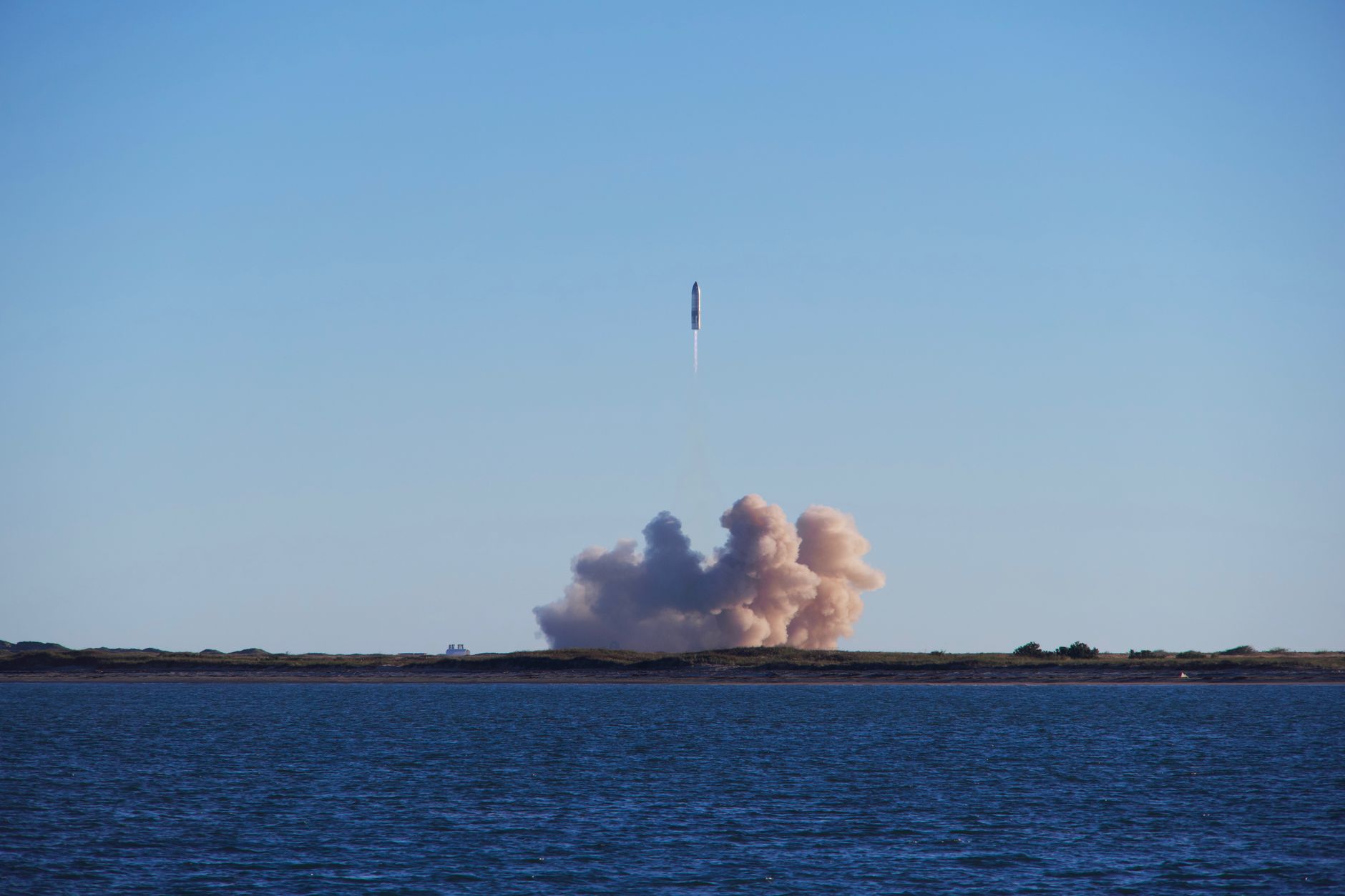
ISRO successful launch marks a significant achievement for the organization and the state of Telangana. T’gana CM has extended heartfelt congratulations to the scientists and engineers involved in the NVS-03 mission.
Overview of the NVS-03 Mission
The Indian Space Research Organisation (ISRO) achieved a significant milestone with the successful launch of the NVS-03 mission. This mission is part of a series aimed at enhancing India’s navigation capabilities, providing more accurate positioning services to users across the country and beyond.
The NVS-03 satellite, equipped with advanced technology, is expected to bolster the existing NavIC system, which currently serves as a regional satellite navigation system. This successful launch not only underscores ISRO’s technical prowess but also showcases its commitment to enhancing national security and economic development through improved navigation services.
Following the launch, Telangana Chief Minister K. Chandrashekar Rao extended his heartfelt congratulations to the ISRO scientists and engineers involved in this remarkable achievement. He emphasized the importance of such initiatives in fostering innovation and technological advancement in India. The Chief Minister highlighted that India’s space exploration efforts, including the successful launch of NVS-03, reflect the country’s growing capabilities in space technology.
In a statement, he expressed pride in the nation’s achievements, stating that these milestones would inspire future generations to pursue careers in science and technology. The successful launch of the NVS-03 mission affirms ISRO’s position as a leader in space exploration, marking another step forward in India’s ambitious space agenda.
T’gana CM’s Statement on ISRO
The Chief Minister of Telangana expressed his heartfelt congratulations to the scientists and engineers of the Indian Space Research Organisation (ISRO) following the successful launch of the NVS-03 mission. In a statement released shortly after the launch, the CM hailed the achievement as a testament to India’s growing prowess in space technology.
He emphasized the hard work and dedication that went into the preparation and execution of the mission, stating that such accomplishments not only enhance India’s reputation on the global stage but also inspire the younger generation to pursue careers in science and technology. The CM remarked, “The successful launch underscores ISRO’s commitment to advancing space exploration and satellite technology, which is crucial for the nation’s development.”
Furthermore, he encouraged the ISRO team to continue their groundbreaking work and assured them of the state government’s support in fostering innovation and research. In his address, the CM highlighted several key benefits of the NVS-03 mission, including:
- Improved communication services across the country.
- Enhanced navigational capabilities for various sectors.
- Strengthening of India’s strategic positioning in space.
He concluded by reiterating the significance of the successful launch, stating that it marks another milestone in India’s space journey, further establishing ISRO as a global leader in space exploration and technology.
Impact of ISRO’s Achievements
The successful launch of the NVS-03 satellite by ISRO has significant implications for India’s space ambitions and technological advancements. This achievement not only showcases the capabilities of Indian scientists but also strengthens the nation’s position in the global space community.
One of the primary impacts of ISRO’s achievements, particularly the successful launch, is the enhancement of satellite communication services across the country. The NVS-03 satellite is designed to improve navigation capabilities, which are crucial for various sectors, including transportation, agriculture, and disaster management. As a result, the successful launch is expected to contribute to more efficient and reliable services.
Furthermore, ISRO’s successful launch fosters a sense of national pride and inspires future generations to pursue careers in science and technology. It encourages educational institutions to promote STEM (Science, Technology, Engineering, and Mathematics) fields, potentially leading to a more skilled workforce in the coming years.
Additionally, the successful execution of such complex missions demonstrates India’s growing self-reliance in space technology. This can pave the way for more robust international collaborations and commercial opportunities, enhancing India’s reputation as a key player in the global space arena.
In summary, the impact of ISRO’s achievements, particularly the successful launch of NVS-03, extends beyond immediate technological benefits, contributing to national pride, educational growth, and international standing.
Celebrating India’s Space Progress
India’s journey into space has been marked by remarkable achievements, and the recent ISRO successful launch of the NVS-03 satellite is a testament to this progress. The Indian Space Research Organisation has consistently demonstrated its capability to innovate and push the boundaries of space exploration. Each successful mission not only enhances India’s position in the global space arena but also serves as an inspiration for future generations.
The NVS-03 mission, part of the Navigation with Indian Constellation (NavIC) program, aims to provide accurate positioning services to users in India and the surrounding region. This achievement underscores ISRO’s commitment to achieving technological advancements and fostering self-reliance in space technology. The satellite is expected to improve communication, navigation, and various other applications critical for both civilian and defense purposes.
As the country celebrates this milestone, it is essential to recognize the collective effort of hundreds of scientists and engineers who worked tirelessly behind the scenes. Their dedication and expertise have made it possible for India to achieve these remarkable feats in a relatively short span of time.
Moreover, the successful launch boosts national pride and encourages more investments in space research and development. With each mission, ISRO continues to pave the way for a brighter future, where space exploration becomes a critical part of India’s growth narrative.
Future Missions Planned by ISRO
Following the recent ISRO successful launch of the NVS-03 satellite, the Indian Space Research Organisation has laid out an ambitious roadmap for future missions. These upcoming projects aim to enhance India’s capabilities in satellite navigation, earth observation, and interplanetary exploration.
Among the key missions planned, ISRO is gearing up for the launch of the Gaganyaan project, which is designed to send Indian astronauts into space. This mission marks a significant milestone in India’s journey towards human spaceflight and is expected to showcase the nation’s technological prowess.
Additionally, ISRO is working on the Aditya-L1 mission, which will study the sun and its impact on space weather. This mission is set to provide crucial data that could help in understanding solar activities and their effects on the Earth’s environment.
Another exciting project is the Chandrayaan-3 mission, aiming to further explore the lunar surface. Building on the learnings from previous missions, this endeavor will focus on landing on the moon and conducting surface experiments.
The organisation is also expanding its satellite constellation for improved communication and remote sensing applications, which will greatly benefit various sectors including agriculture, disaster management, and urban planning.
As ISRO continues to push the boundaries of space exploration, these planned missions reflect its commitment to advancing science and technology for the betterment of society.
Role of Engineers in Space Launches
The recent ISRO successful launch of the NVS-03 satellite underscores the vital contributions of engineers in space exploration. Engineers play a crucial role in every phase of a launch, from the initial design to the final execution.
During the preparation stages, engineers are responsible for:
- Designing spacecraft: They create intricate systems that must withstand extreme conditions in space.
- Testing components: Each component undergoes rigorous testing to ensure reliability and functionality.
- Simulating launches: Engineers conduct simulations to predict potential challenges and refine launch procedures.
On the day of the launch, the engineers’ expertise is put to the test as they monitor every aspect of the mission. They are tasked with:
- Managing countdown sequences: Precision timing is essential for a successful launch.
- Overseeing systems checks: Continuous monitoring ensures that all systems are functioning as intended.
- Addressing emergencies: Quick decision-making can be crucial if unexpected issues arise.
Ultimately, the dedication and hard work of engineers are instrumental in enabling ISRO to achieve its ambitious goals. Their efforts not only facilitate the successful launch of missions like NVS-03 but also inspire future generations to pursue careers in science and technology.
The T’gana CM expressed pride in the team’s dedication and hard work that led to the ISRO successful launch. He emphasized the significance of this achievement for the state’s technological advancement and future projects.
By Divinelovers via Openverse
Sources
India GPS boost: Proven benefits of ISRO’s NVS-03 launch · ISRO GSLV-F18 Launch: A Clear Success for India’s Space Program · Microsoft Copilot on Smart TVs: The Worst Rollout Ever