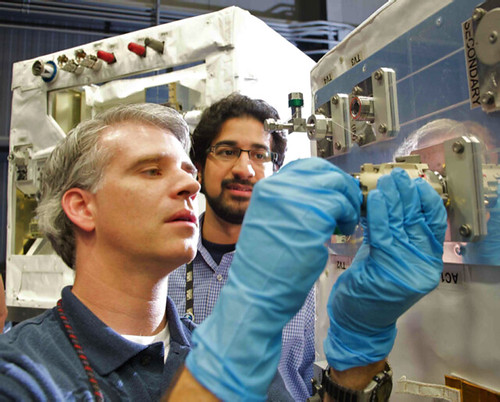
The Pakistani astronaut Tiangong mission represents a significant milestone in international space cooperation.
Overview of the Tiangong Mission
The Tiangong mission marks a significant milestone in international space collaboration, particularly with the participation of a Pakistani astronaut. This initiative is part of China’s ongoing efforts to expand its presence in space and foster partnerships with nations around the globe.
The mission will focus on several key objectives:
- Scientific Research: Conducting experiments in microgravity that can lead to advancements in various fields.
- Technological Development: Testing new technologies that could be vital for future space exploration.
- International Cooperation: Strengthening ties with countries like Pakistan, showcasing a shared commitment to space exploration.
This collaboration not only highlights Pakistan’s growing capabilities in space technology but also signifies a smart new era for the Tiangong mission, as it embraces diversity in its crew and initiatives. The involvement of a Pakistani astronaut is a clear indication of the evolving landscape of global space exploration.
Significance of Pakistani Astronaut’s Role
The participation of a Pakistani astronaut in the Tiangong mission marks a significant milestone not only for Pakistan but also for international collaboration in space exploration. This historic event highlights the growing partnership between Pakistan and China, emphasizing shared goals in advancing scientific research and technology.
In this new era of space endeavors, the role of the Pakistani astronaut is pivotal for several reasons:
- Symbol of Unity: The mission symbolizes the strengthening of ties between two nations, showcasing mutual support in the realm of space exploration.
- Inspiration: The astronaut’s journey can inspire future generations in Pakistan to pursue careers in science, technology, engineering, and mathematics (STEM).
- Collaboration: The Tiangong mission offers an opportunity for Pakistani scientists to collaborate with their Chinese counterparts, fostering knowledge exchange and innovation.
- Global Representation: A Pakistani astronaut’s involvement exemplifies the diverse contributions to global space initiatives, encouraging inclusivity.
Overall, the significance of the Pakistani astronaut’s role in the Tiangong mission cannot be overstated, as it paves the way for future advancements in space exploration.
China’s Space Program Developments
China’s space program has seen significant advancements in recent years, marked by a series of ambitious missions and the establishment of the Tiangong space station. The Tiangong mission represents a pivotal moment in space exploration, as it aims to facilitate international collaboration and scientific research. This initiative not only highlights China’s technological capabilities but also showcases its commitment to fostering global partnerships in space.
With the inclusion of a Pakistani astronaut in the Tiangong mission, the program enters a new phase of cooperation. This landmark achievement emphasizes the importance of cross-border collaboration in scientific endeavors. Furthermore, it opens new avenues for research, allowing astronauts from different nations to work together in a microgravity environment.
As nations unite in space exploration, the Pakistani astronaut’s participation in the Tiangong mission serves as a symbol of shared aspirations and collective progress in the field of space science.
International Collaborations in Space
The successful integration of international talent within the space sector has been exemplified by the upcoming participation of a Pakistani astronaut in the Tiangong mission. This collaboration not only highlights China’s ambition in expanding its space program but also strengthens ties with Pakistan, showcasing a shared commitment to scientific advancement.
Such partnerships pave the way for a new era in space exploration, fostering innovation and the exchange of knowledge across borders. The Pakistani astronaut’s involvement in the Tiangong mission is a testament to the importance of global cooperation in achieving complex missions.
Additionally, this initiative underscores the growing trend of countries working together in space endeavors, as seen in the following:
- Joint missions between NASA and ESA.
- Collaborative research between Russia and India.
- International Space Station partnerships.
As nations unite for common goals, the Pakistani astronaut’s role in the Tiangong mission marks a significant milestone in international space collaborations.
Future of Space Exploration
The future of space exploration looks promising, especially with the inclusion of a Pakistani astronaut in the Tiangong mission. This historic milestone not only highlights the advancements in China’s space program but also signifies a shift towards greater international cooperation in space endeavors.
As countries unite to share knowledge and resources, the challenges of space travel become more manageable. The collaborative efforts seen in the Tiangong mission may pave the way for future missions, enabling countries like Pakistan to contribute significantly to global space initiatives.
Moreover, the presence of a Pakistani astronaut aboard the Tiangong mission serves as an inspiration for the next generation of scientists and engineers in Pakistan. It underscores the importance of investing in space education and research, encouraging young minds to dream big.
- Increased collaboration among nations
- Enhanced technology sharing
- Opportunities for emerging space programs
The Pakistani astronaut’s participation marks the beginning of a smart new era in space exploration.
Challenges Faced by Astronauts
The journey of astronauts, including the Pakistani astronaut participating in the Tiangong mission, is fraught with numerous challenges that test their resilience and training.
- Physical Strain: Astronauts face extreme physical demands, including the harsh conditions of microgravity, which can lead to muscle atrophy and bone density loss.
- Psychological Challenges: The isolation and confinement during missions can affect mental health. Astronauts must maintain psychological well-being to perform effectively.
- Technical Difficulties: Navigating complex spacecraft systems and handling potential malfunctions requires extensive training and quick decision-making skills.
- Environmental Hazards: Exposure to cosmic radiation and space debris poses significant risks, necessitating comprehensive safety protocols.
As the Pakistani astronaut prepares for the Tiangong mission, overcoming these challenges will be crucial for the success of the mission and the advancement of international space exploration.
Public Reaction to the Mission
The announcement of the Pakistani astronaut joining the Tiangong mission has sparked a wave of excitement across the nation. Many citizens are expressing their pride and optimism about the historic achievement, viewing it as a significant milestone not only for Pakistan but for the entire region.
Public opinion has been overwhelmingly positive, with numerous social media posts celebrating this groundbreaking moment. People are sharing their hopes for increased collaboration between Pakistan and China, particularly in the fields of science and technology.
Moreover, educational institutions are leveraging this event to inspire the younger generation. Schools and universities are organizing discussions and events to encourage interest in STEM fields.
As the Pakistani astronaut prepares for the Tiangong mission, many are optimistic that this endeavor will pave the way for future advancements in space exploration and strengthen international ties. The mission is seen as a symbol of unity and shared goals in the quest for knowledge beyond our planet.
The Pakistani astronaut Tiangong mission marks a significant milestone in Pakistan’s space exploration efforts. As the world watches, this Pakistani astronaut Tiangong mission could inspire future generations to pursue careers in science and technology.