
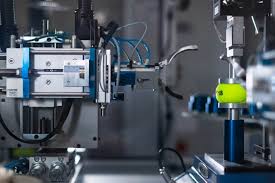
In modern industrial manufacturing, precision, efficiency, and consistency are essential for achieving high-quality results, and the role of Urethane Planetary Mixers has become increasingly important as advanced mixing technology for industrial production environments. These systems are widely used in industries such as automotive, aerospace, construction, electronics, and chemical processing, where uniform blending of polyurethane materials is critical for product performance and durability.
What are Urethane Planetary Mixers?
What exactly are urethane planetary mixers used for in industrial production systems? These are specialized mixing machines designed to blend polyurethane components using a planetary motion mechanism that ensures complete and uniform material mixing.
The system works by rotating the mixing blades on their own axis while simultaneously revolving them around the mixing container. This dual-motion process ensures that every part of the material is thoroughly mixed without leaving unmixed zones, resulting in consistent material quality.
Polyurethane materials require precise mixing to achieve desired physical and chemical properties. Planetary mixers ensure that all components are evenly distributed, improving product reliability and performance.
How Does Planetary Mixing Technology Work?
How does advanced planetary mixing technology enhance industrial production processes? The system operates using a unique mechanical design that combines rotation and revolution.
As the mixing blade rotates, it also moves around the entire container, ensuring full coverage of the mixing volume. This motion creates a highly efficient flow pattern that eliminates dead zones and ensures uniform blending of all materials.
Operators can adjust speed, mixing time, and intensity based on material viscosity and production requirements. This flexibility allows planetary mixers to handle a wide range of polyurethane formulations used in industrial applications.
Why Advanced Mixing Technology Matters in Industrial Production?
Why is advanced mixing technology so important in industrial manufacturing environments? The quality of polyurethane products depends heavily on how well the materials are mixed during production.
Inconsistent mixing can lead to defects such as weak bonding, uneven curing, or structural instability. These issues can compromise product performance, especially in industries such as automotive manufacturing, aerospace engineering, and electronics production.
Advanced planetary mixing technology ensures that every batch is uniform, reducing defects and improving overall product quality and reliability.
Key Features of Urethane Planetary Mixers?
What features make urethane planetary mixers suitable for industrial production? Several advanced design elements contribute to their high performance and reliability.
The planetary motion system ensures complete material blending. Variable speed control allows operators to adjust mixing intensity based on material requirements. Heavy-duty construction ensures durability under continuous industrial use.
Advanced control systems enable precise programming of mixing cycles, including speed, duration, and direction. Some systems also include vacuum functionality to remove trapped air, improving material density and quality.
Each feature is designed to maximize efficiency, consistency, and performance in industrial production environments.
Where are Planetary Mixers Used in Industry?
Where are urethane planetary mixers commonly applied in industrial production? These systems are widely used in multiple sectors due to their ability to handle complex polyurethane formulations.
In automotive manufacturing, they are used for adhesives, sealants, vibration damping materials, and structural components. Construction industries rely on them for insulation foams, coatings, and waterproofing materials.
The electronics industry uses planetary mixers for potting and encapsulation processes, protecting sensitive components from environmental damage. Aerospace manufacturers depend on them for high-performance insulation and lightweight structural materials.
Furniture and bedding industries also utilize these mixers for producing foam materials with consistent density and comfort characteristics.
How Planetary Motion Improves Mixing Efficiency?
How does planetary motion improve industrial mixing performance? Unlike conventional mixers, planetary systems ensure that the mixing tool moves through every section of the material volume.
The combination of rotation and revolution creates a complex flow pattern that eliminates unmixed zones and ensures uniform distribution of all components. This results in a more consistent chemical reaction throughout the material.
This improved efficiency reduces mixing time, increases production speed, and enhances overall product quality. It also minimizes waste caused by incomplete or inconsistent mixing.
Benefits of Advanced Planetary Mixing Systems?
What are the key benefits of using urethane planetary mixers in industrial production? One of the most important advantages is improved consistency. Every batch is mixed under identical conditions, ensuring uniform quality.
Another major benefit is increased efficiency. The system can handle large production volumes with minimal manual intervention, reducing labor costs and improving productivity.
Material waste is also significantly reduced due to precise and complete mixing. This leads to cost savings and more sustainable production practices.
Vacuum-assisted systems help remove air bubbles, resulting in stronger, smoother, and higher-quality finished products.
Challenges in Industrial Mixing Processes?
What challenges exist in polyurethane mixing within industrial environments? Despite advanced technology, several factors must be carefully managed.
Material viscosity variations can affect mixing performance, requiring adjustments in speed and timing. Temperature fluctuations can also influence chemical reactions, impacting final product quality.
Regular cleaning and maintenance are essential to prevent material buildup inside the mixing chamber. If not properly maintained, residual material can affect future batches.
Proper calibration is also necessary to ensure consistent performance across all production cycles.
Technological Advancements in Planetary Mixers?
How is modern technology improving urethane planetary mixers? Today’s systems are increasingly equipped with digital controls and automation features.
Programmable logic controllers allow precise adjustment of mixing parameters. Real-time sensors monitor temperature, pressure, and material consistency during operation.
Artificial intelligence is being introduced to optimize mixing cycles and improve efficiency. Predictive maintenance systems help identify potential issues before they occur, reducing downtime.
Energy-efficient motor systems are also being developed to reduce operational costs while maintaining high performance.
These advancements are making planetary mixers more intelligent, efficient, and adaptable to modern industrial needs.
How to Choose the Right Industrial Mixer?
How can manufacturers select the most suitable urethane planetary mixer for industrial production? The selection depends on production scale, material type, and required precision.
Large-scale industrial operations require high-capacity automated systems with advanced control features. Smaller production units may benefit from compact and flexible machines.
Durability, maintenance requirements, and system compatibility with existing production lines must also be considered. Choosing the right system ensures long-term efficiency and reliability.
Future of Urethane Planetary Mixing Technology?
What does the future hold for planetary mixing systems in industrial production? The industry is moving toward fully automated, digitally integrated manufacturing environments.
Artificial intelligence, machine learning, and cloud-based monitoring will play a major role in improving precision and efficiency. Systems will become more adaptive, adjusting automatically based on production conditions.
Sustainability will also be a key focus, with future systems designed to reduce energy consumption and material waste.
As technology evolves, urethane planetary mixers will become even more advanced and essential for industrial production worldwide.
Conclusion
In modern industrial production, advanced mixing technology plays a crucial role in ensuring product quality and consistency. Urethane planetary mixers provide the precision, efficiency, and reliability needed for handling complex polyurethane materials.
By combining planetary motion, automation, and advanced control systems, these mixers deliver superior performance across multiple industries. As innovation continues, they will remain a cornerstone of industrial manufacturing and high-quality polyurethane processing.
